Three startups to build in language learning
A cartoon owl just ran a billion dollars through a language app. Here is where the market it leads is still wide open.
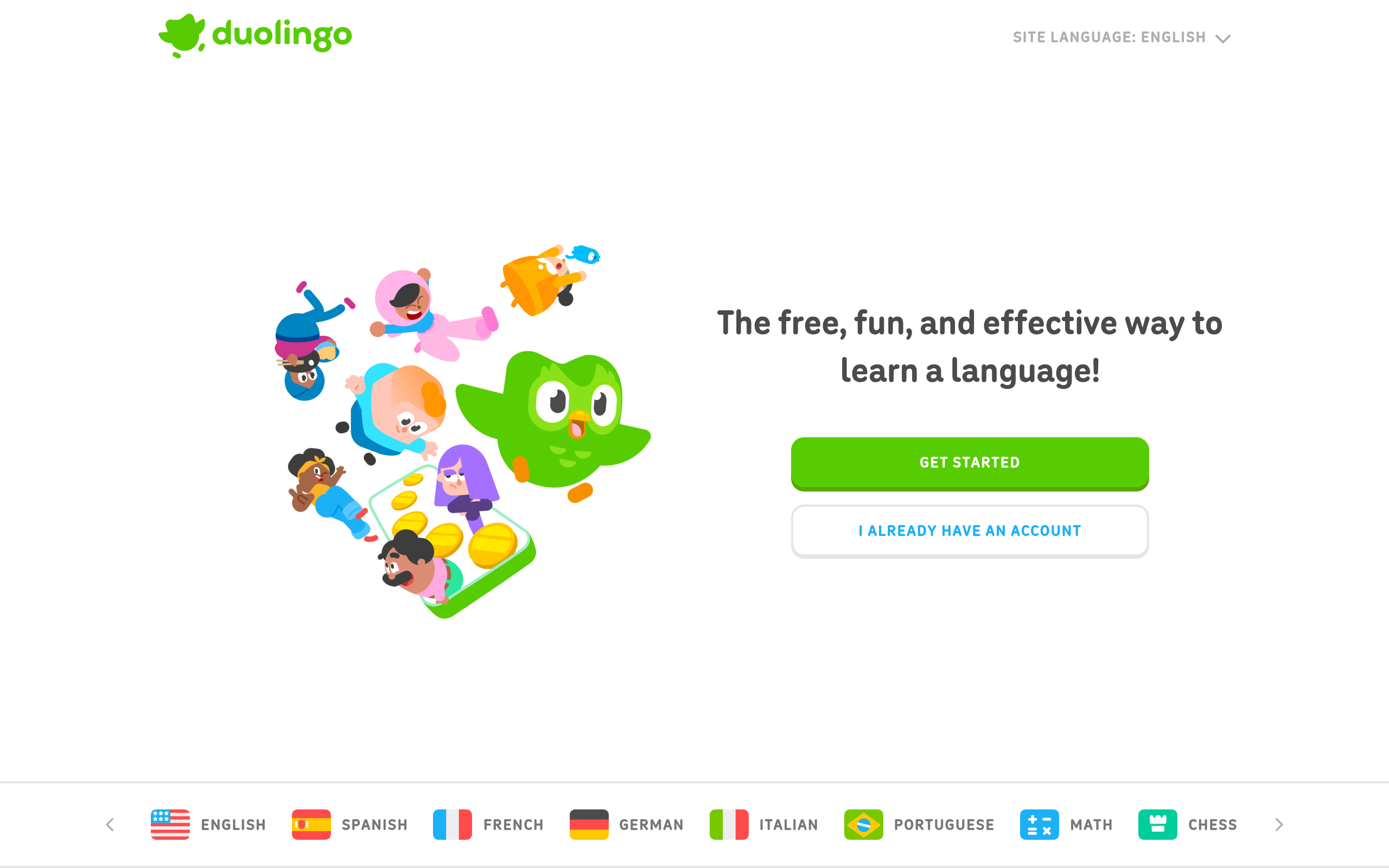
duolingo.com - "the free, fun, and effective way to learn a language," now a billion-dollar business
REVENUE · PUBLIC COMPANY · NASDAQ: DUOL · FY2025$1.04 billionDuolingo · gamified language app · 52.7M daily active users · 12.2M paying subscribers · its first billion-dollar yearCheck the numbers yourself: investors.duolingo.com
The online language-learning market is about $24 billion in 2026, and it is growing around 16% a year. It sits inside a total language market worth roughly $100 billion.
Duolingo proves the category prints money. A billion dollars of revenue, 52.7 million people opening the app every day, 12.2 million of them paying.
Look at who else is here. italki and Preply sell you human tutor hours. LingQ and Babbel sell you structured courses. Speak and Praktika sell you an AI to talk to. Everyone is chasing the same beginner.
That is the tell. Duolingo is a beginner habit machine. It is brilliant at getting you to tap for 200 days straight. It is weak at getting you to actually speak. And in April 2025 its CEO told staff the company would go "AI-first" and take "small hits on quality." Users noticed.
Here are three startups to build in the gaps that leaves.
THE THREE PLAYS
1. The clinical English coach
Duolingo teaches you to order a coffee. A nurse from Manila needs to run a shift handoff in a Texas ICU.
- Who: Internationally-educated nurses and doctors preparing to work in the US, UK, Ireland, Australia, or the Gulf.
- Gap: Duolingo, Babbel, and Speak teach general English. None teach a patient handoff, an SBAR report, or how to break bad news. Human OET tutors do, at $40 to $80 an hour, and there are not enough of them.
- Build: AI role-play of real clinical encounters. Patient histories, ward rounds, phone orders. OET-aligned speaking and writing with instant feedback. Specialty vocabulary for nursing, medicine, and pharmacy.
- Price:
$30–80/mo
- Why now: OET is now accepted by CGFNS for the US VisaScreen and by a growing list of state nursing boards, including Florida, Washington, and Virginia. The WHO projects a shortfall of 13 million nurses by 2030, so every wealthy health system is importing nurses who must pass an English exam first.
- Wedge: It trains the exact scenarios the exam and the job test, not generic small talk. The stakes are a career and a visa, so the willingness to pay is real.
2. The real-content immersion engine
Every intermediate learner hits the same wall. Too advanced for Duolingo, not ready for a native podcast. That gap is a product.
- Who: Intermediate learners who finished the beginner apps and stalled.
- Gap: Duolingo caps out at a beginner gamified loop. LingQ pioneered learning from real content, but the product feels a decade old. italki works, but it costs $15 to $40 a session.
- Build: Pull real native YouTube, podcasts, and news in the target language. Auto-generate a graded version of each, click any word to define it, spaced repetition on the ones you miss, and difficulty that adapts to you.
- Price:
$12–25/mo
- Why now: In April 2025 Duolingo's CEO said the company would go "AI-first" and accept "small hits on quality." Loyal users revolted and many deleted the app. That is an opening. And LLMs made grading and adapting real content cheap in 2025, which is the hand-built thing LingQ has done for years.
- Wedge: Real content the learner actually cares about, adapted to their level, instead of a closed gamified loop that never quite reaches fluency.
3. The hybrid tutor marketplace
italki sells you human hours. Speak sells you an AI. The winning product sells both, and pays the tutor more.
- Who: Serious learners who want real conversation, and the tutors who teach them.
- Gap: italki and Preply are all-human and expensive, and tutors burn paid minutes on drills a machine could run. Speak and Praktika are all-AI, with no human on the other end. Nobody blends the two well.
- Build: AI runs the drills, the homework, and the prep between sessions. The human tutor does the live conversation and the correction. One place for the learner, and a tutor who earns more per hour because the AI handled the busywork.
- Price:
$19–49/moplus a cut of tutor sessions.
- Why now: Pure-AI apps proved conversation practice works in 2025. Speak raised at a $1 billion valuation, and Praktika undercut the field at about $8 a month. That squeeze is closing in on the human marketplaces, and the answer is a hybrid, not a side you are forced to pick.
- Wedge: The learner gets cheap unlimited practice and real human feedback. The tutor gets better-prepared students and more income per hour actually taught.
WHERE TO START
Start with the clinical English coach, number one.
It has the highest willingness to pay in the whole market. A nurse is not buying a hobby. She is buying a job in another country, and an exam stands between her and it.
Here is the first step this week. Find fifteen internationally-educated nurses in the OET prep groups on Facebook and Reddit. Ask each one what scares them most about the speaking test. Build the AI patient-encounter role-play for that one fear first, and sell it to those fifteen.
Want the full build plan for one of these? Reply 1, 2, or 3 and we'll send it, free.
Forward this to the friend who has restarted the same Duolingo streak four times. Tomorrow: another verified number, three more ideas.